


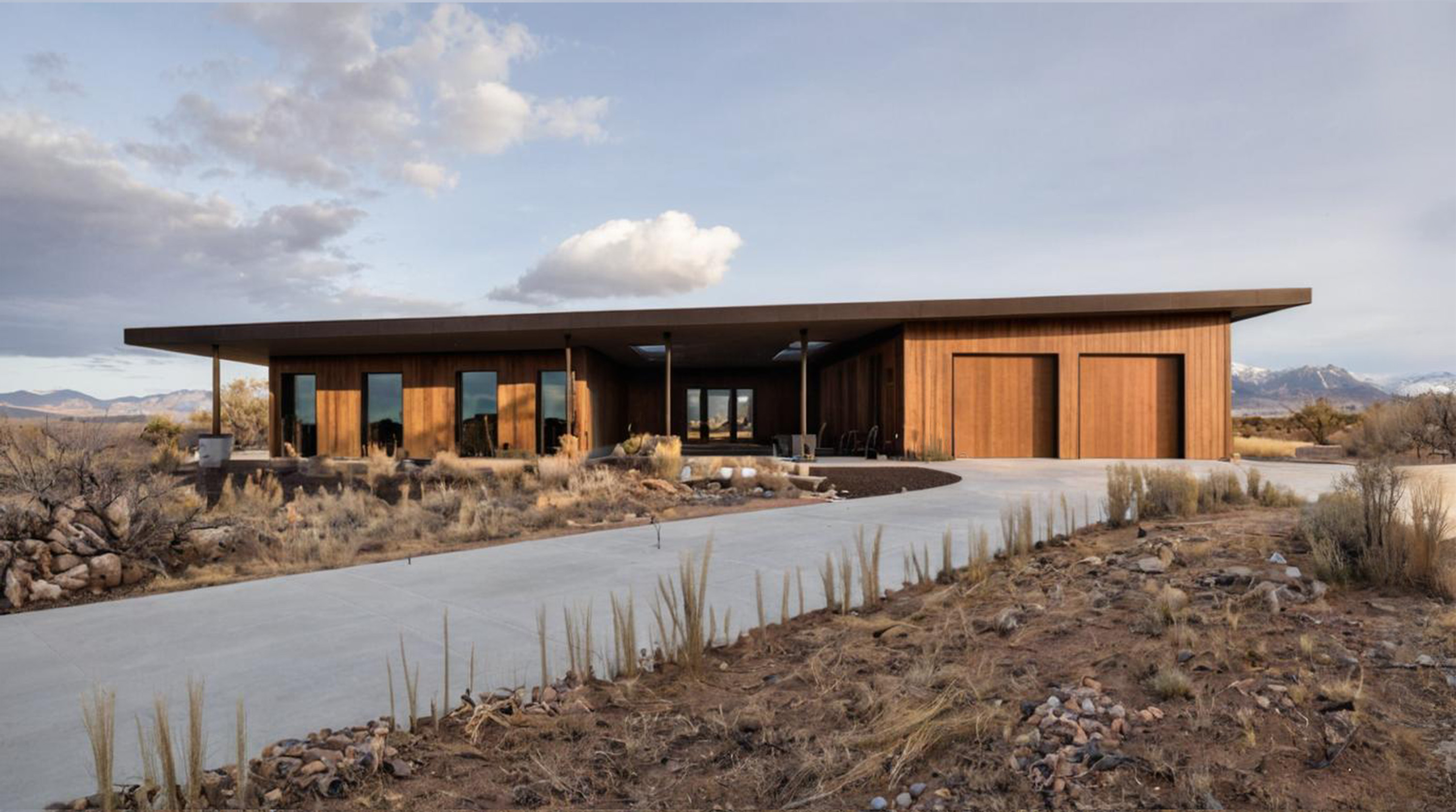
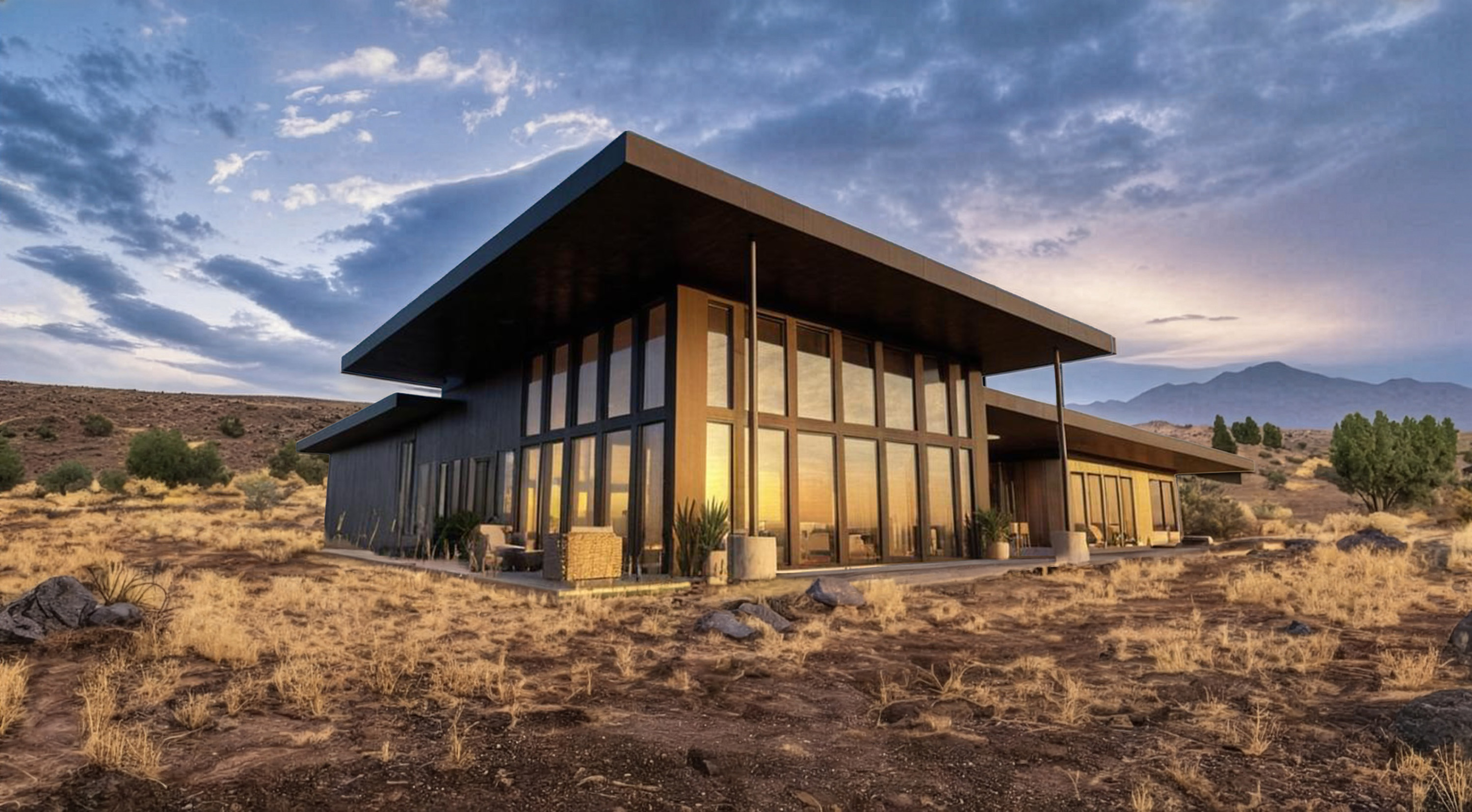
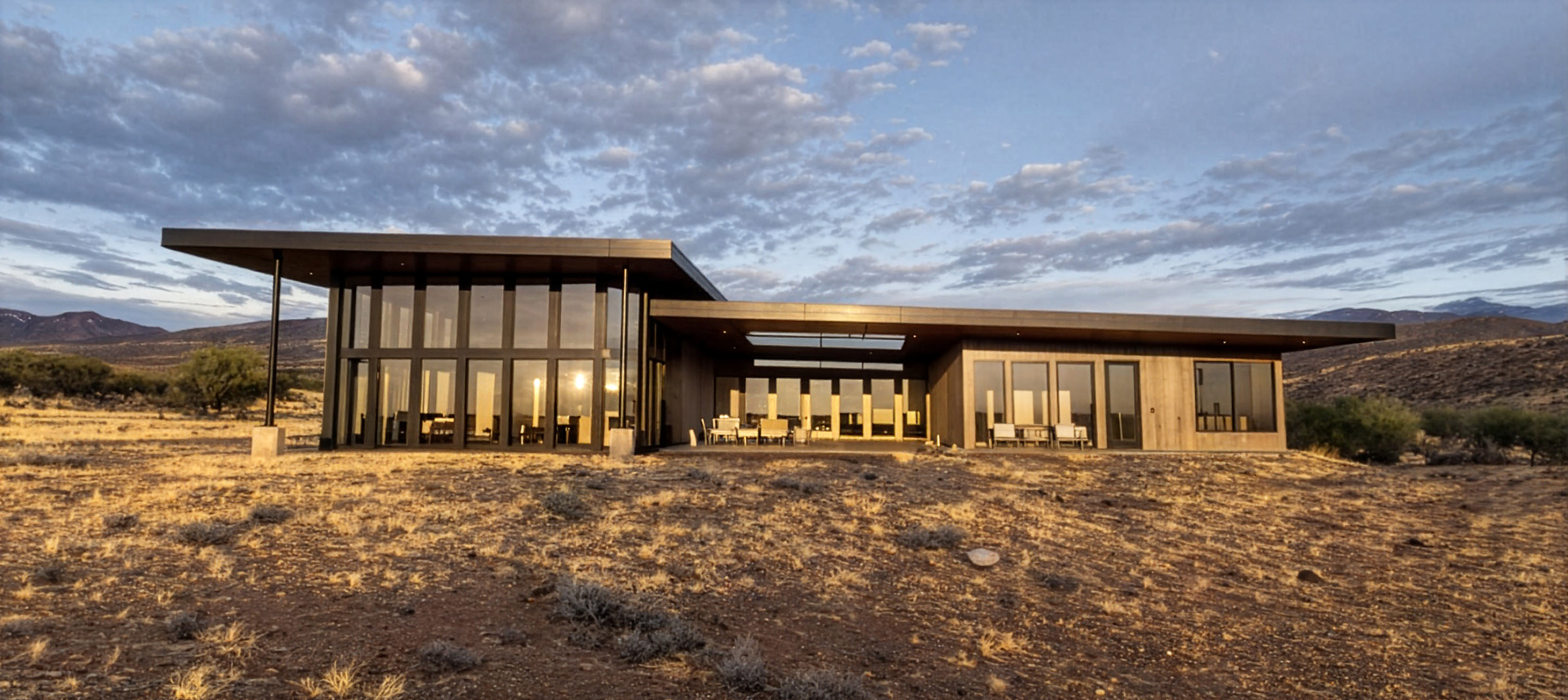
This custom residence in the Methow Valley is organized as a series of sheltered courtyards and framed view corridors, responding directly to the region’s intense sun, snow loads, and exposed wind conditions. Designed by a residential architect specializing in mountain environments, the home uses a large, sweeping roof form to protect both north and south courtyards, creating comfortable, wind-sheltered outdoor living spaces throughout the year.
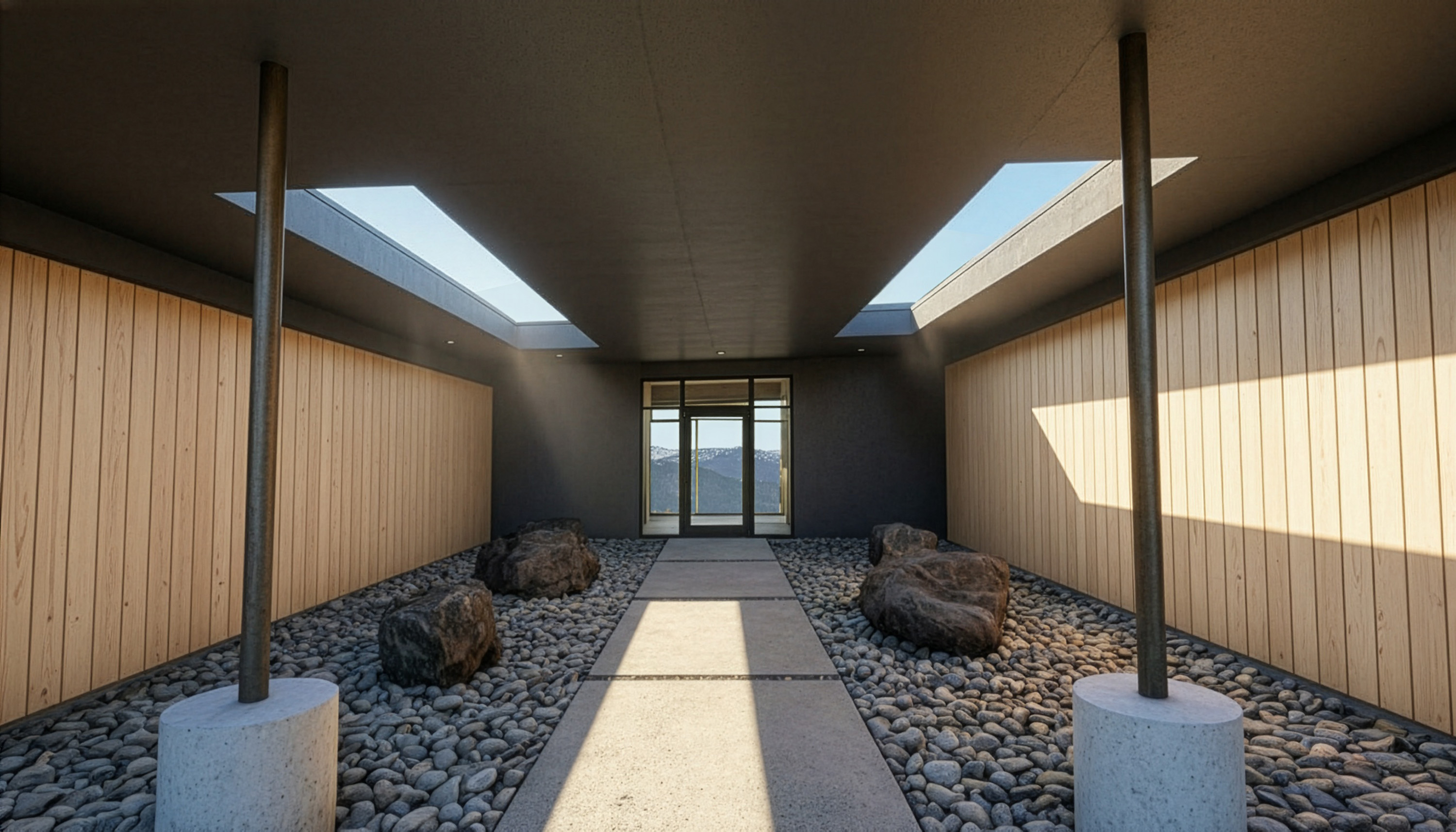
The arrival sequence is defined by a symmetrical composition that frames expansive views beyond the home. Rectangular roof apertures introduce controlled natural light into the entry courtyard, establishing a sublime procession as one approaches the entrance. This intentional use of light and symmetry reinforces a strong sense of hierarchy and orientation within the overall design.
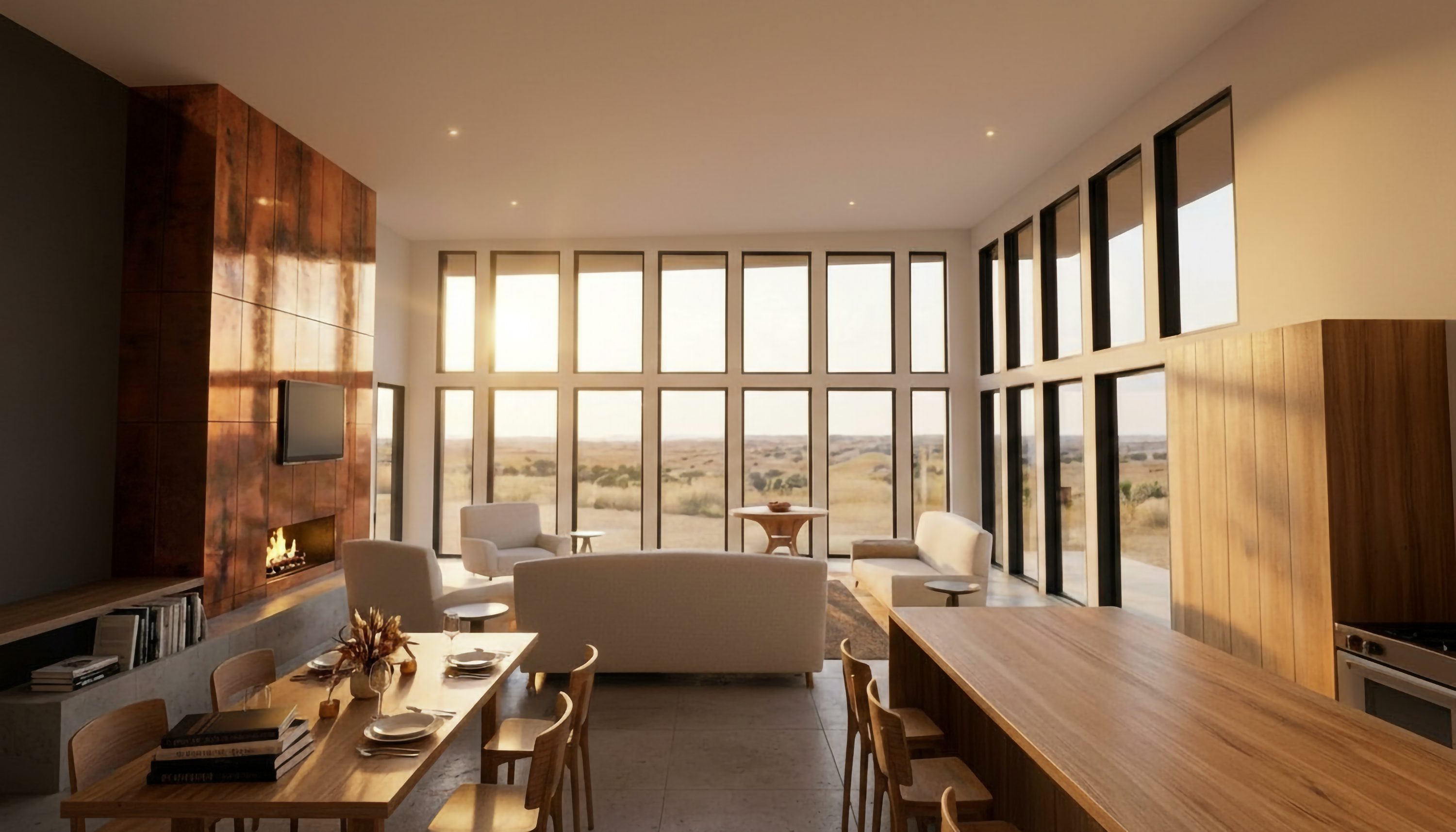
At the heart of the home, the primary living space follows a kitchen, living, and dining (KLD) configuration, tailored for modern residential living. This central volume is anchored by a feature fireplace with an integrated workspace on one side, while a large mosaic glass wall defines the prominent view corner—capturing natural light and emphasizing the connection to the surrounding landscape.
The architecture prioritizes shaded exterior and transitional spaces to improve comfort during hot Methow Valley summers, while the elevated roof geometry and courtyard arrangement provide protection during winter conditions. The tallest and most expressive portion of the home is positioned at the primary view corner, reinforcing the relationship between shared program, spatial importance, and visual presence.
The plan is organized as an “H” configuration, consisting of two parallel bars separated by courtyards and a central entry zone. The upper bar contains the primary living spaces, while the lower bar houses private functions. The central zone acts as a threshold, integrating circulation, entry, and outdoor rooms into a cohesive architectural sequence.
This project reflects a site-specific approach to custom residential architecture in Washington State, balancing climate responsiveness, spatial hierarchy, and refined modern design.



