

Fire-resistant home design in North Central Washington combines Class A materials, ember-resistant detailing, evolving WUI code compliance, and Firewise site planning to help protect custom homes in areas like Leavenworth, Chelan, Wenatchee, and Winthrop from increasing wildfire risk.
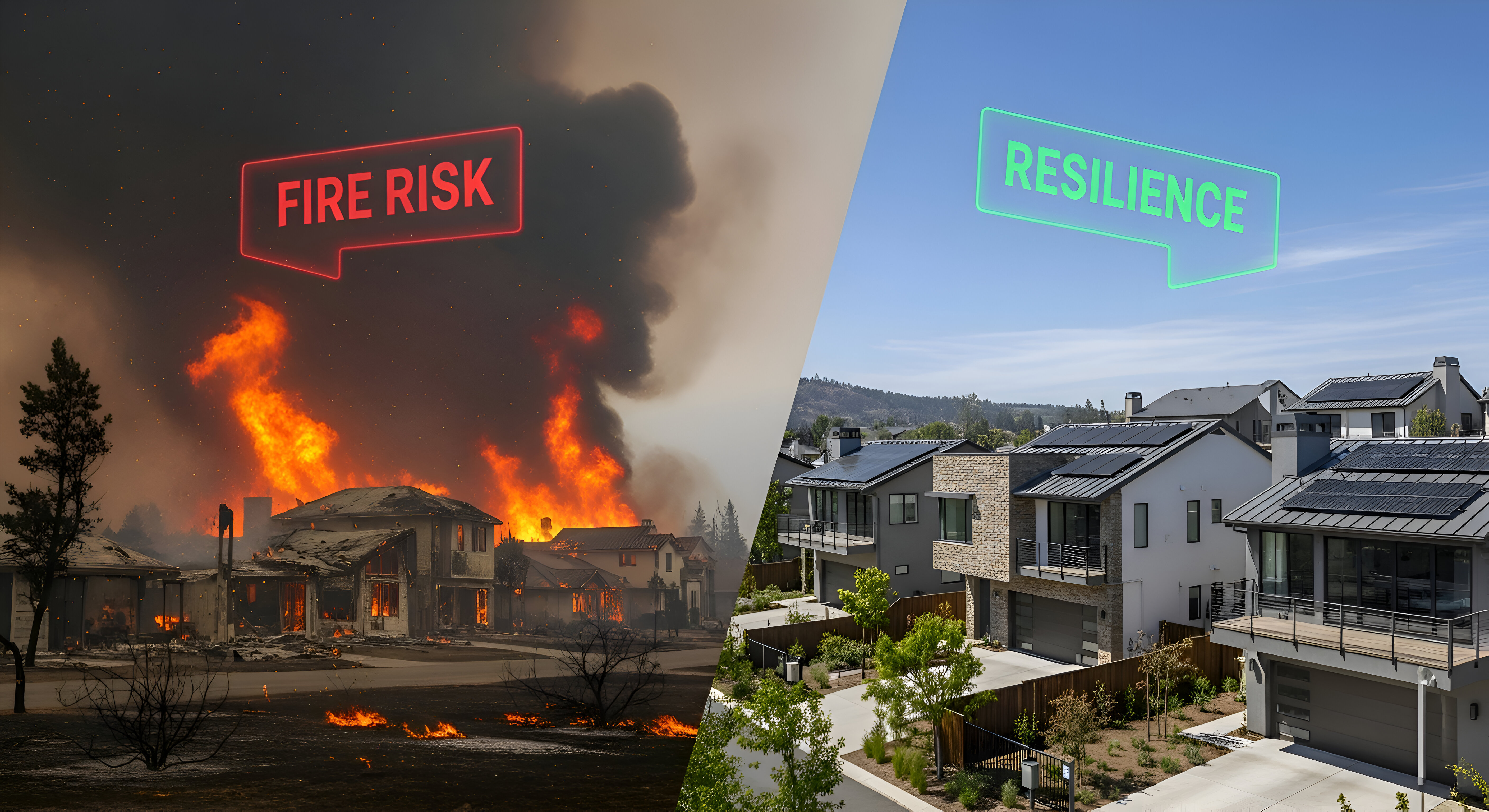
In the wildland-urban interface of North Central Washington, where forests meet homes in and around Leavenworth, Chelan, Wenatchee, and Winthrop, fire-resilient design is no longer optional — it’s essential. With wildfire risk increasing across the region and building codes evolving to respond to that risk, thoughtful design, material selection, and site planning are critical for protecting your custom home and family.
At Refine Design Architecture, we help homeowners and builders integrate fire-resistant strategies from the earliest stages of design through construction — creating homes that are beautiful, functional, and resilient.
Homes in North Central Washington sit near forested landscapes and steep terrain, conditions that can accelerate wildfire spread. While wildfires are a natural part of the region’s ecology, embers carried by wind can ignite homes long before flames arrive. Research shows that structures with fire-resistant materials and defensible space are far more likely to survive wildfire exposure than those without such measures.
Washington’s Wildland-Urban Interface (WUI) Code — part of the state’s building code framework — establishes standards for construction in high-risk areas. It defines where WUI requirements apply using the WA-WUI map and includes provisions for fire-resistant materials and construction techniques.
Although recent legislative changes have modified the timeline and scope of code implementation in some jurisdictions, local governments across Washington are preparing to adopt strengthened wildfire resilience requirements, including materials and siting standards, this year. Staying ahead of these changes helps ensure compliance and enhances long-term home performance.
You can learn more about broader wildfire resilience principles in our related post, “Wildfire Resiliency & Architecture.”
One of the most effective ways to protect your home is through material selection. Key components include:
- Class A Fire-Resistant Roofing: Class A roofing materials — such as metal, clay/concrete tile, or fire-resistant asphalt shingles — provide the highest level of protection against flame and ember exposure.
- Noncombustible Exterior Cladding: Fiber cement, stucco, stone, or brick siding are excellent choices for walls and trim in fire-prone areas. These materials don’t contribute fuel to a fire and help prevent ignition from wind-blown embers.
- Fire-Resistant Coatings for Wood: For homeowners who prefer the look of wood, new fire-resistant coatings and additives can be applied to wood siding, decks, and trim to enhance performance without compromising aesthetics. These products, including fire-retardant stains and intumescent coatings, can help wood assemblies resist ignition and meet fire-code performance criteria.
- Fire-Rated Vents and Screens: Embers can enter attics and crawl spaces through vents. Installing ember-resistant vent screens and fire-rated soffit systems blocks embers while allowing necessary airflow.
Ventilation is essential for moisture control, but in fire-prone regions, vents must be protected. Fire-resistant soffit vents and crawl space screens help prevent embers from entering hidden cavities where ignition can quickly spread unseen. Combining screened vents with noncombustible materials and proper sealing reduces vulnerability without sacrificing performance.
Creating defensible space around your home — clear, fire-resistant landscaping — is as important as the home itself:
Zone 1 (0–5 feet): Use noncombustible hardscapes (gravel, stone, patios) and keep vegetation minimal.
Zone 2 (5–30 feet): Plant fire-resistant shrubs and maintain spacing between plants to slow fire spread.
Zone 3 (30–100+ feet): Thin trees, remove dead vegetation, and regularly maintain grasses and underbrush.
Defensible space not only reduces the chance of direct flame contact, but also limits radiant heat and slows advancing fire fronts.
As custom residential architects serving Leavenworth, Chelan, Wenatchee, Winthrop, and surrounding communities, we believe resilient design starts with understanding your site and risk profile. We balance code requirements, material performance, and aesthetic goals to deliver homes that stand up to fire risk while reflecting your vision.
From early concept planning to final detailing, fire-resistant design is an investment in safety, longevity, and peace of mind.



